Français
 Deutsch
 Italiano
 Español
 Čeština
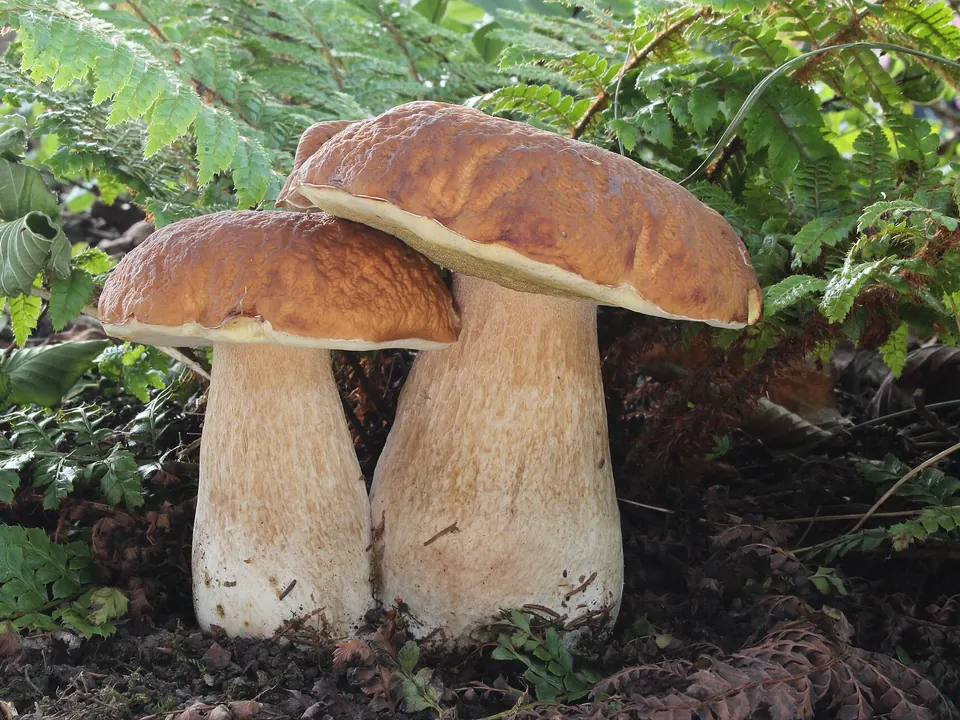
Recognising ceps
Four boletes with white pores, often sold together:
- the Bordeaux cep or porcino (Boletus edulis), light brown cap with a white edge;
- the summer cep (B. reticulatus, formerly aestivalis), matt, often cracked cap, net pattern over the whole stem;
- the bronze cep or black cep (B. aereus), brown-black cap, rather southern, under oaks and sweet chestnuts;
- the pine cep (B. pinophilus), mahogany cap, in the mountains and under pines.
Shared signature: white pores that turn yellow-green with age, a swollen stem decorated with a fine net pattern, white flesh that does not turn blue when cut.
Look-alikes
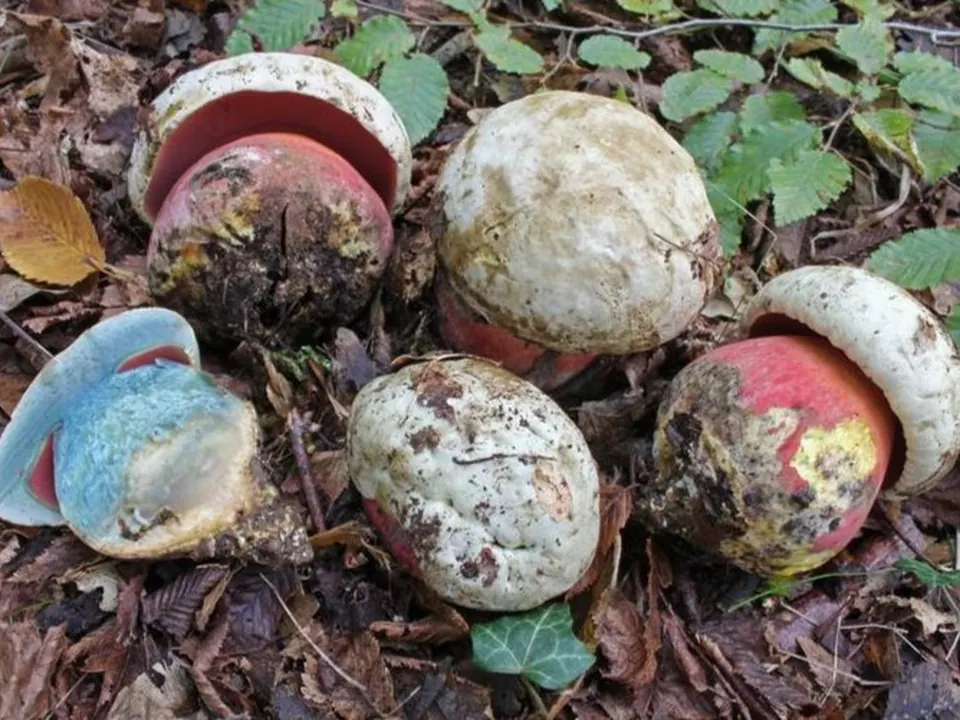
Whitish cap, red pores and stem, flesh that turns blue when cut. Under broadleaves, on calcareous soil. Severe digestive upset.
?Photo davidepuddu, CC BY 4.0, Wikimedia Commons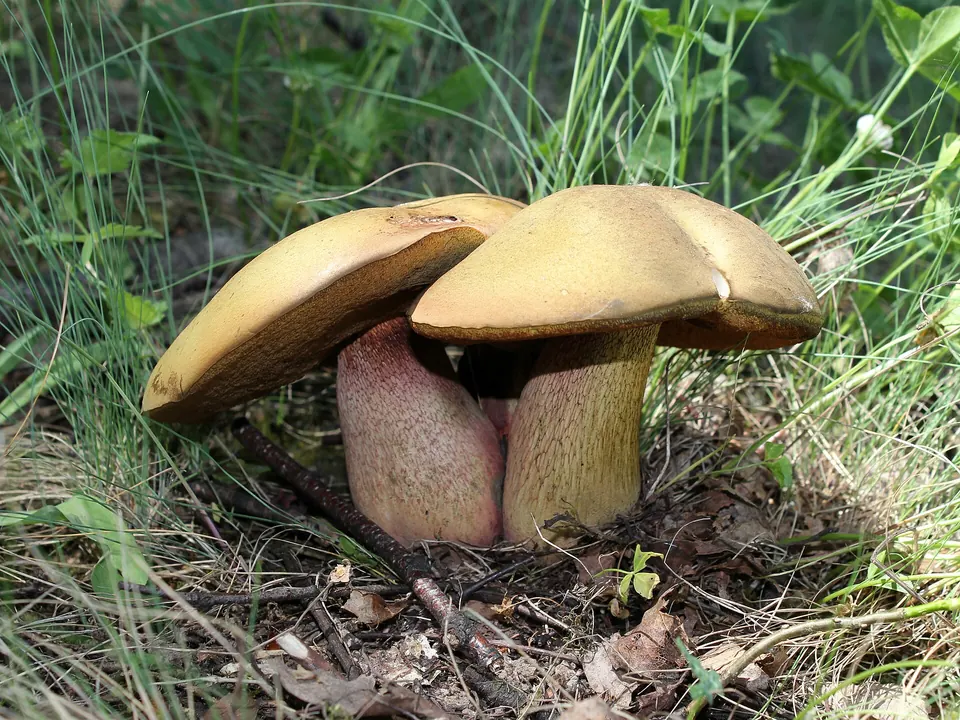
Orange-red pores, reddish net-patterned stem, flesh that bruises strongly blue. Toxic raw or undercooked; it is not a cep.
?Photo George Chernilevsky, Public domain, Wikimedia Commons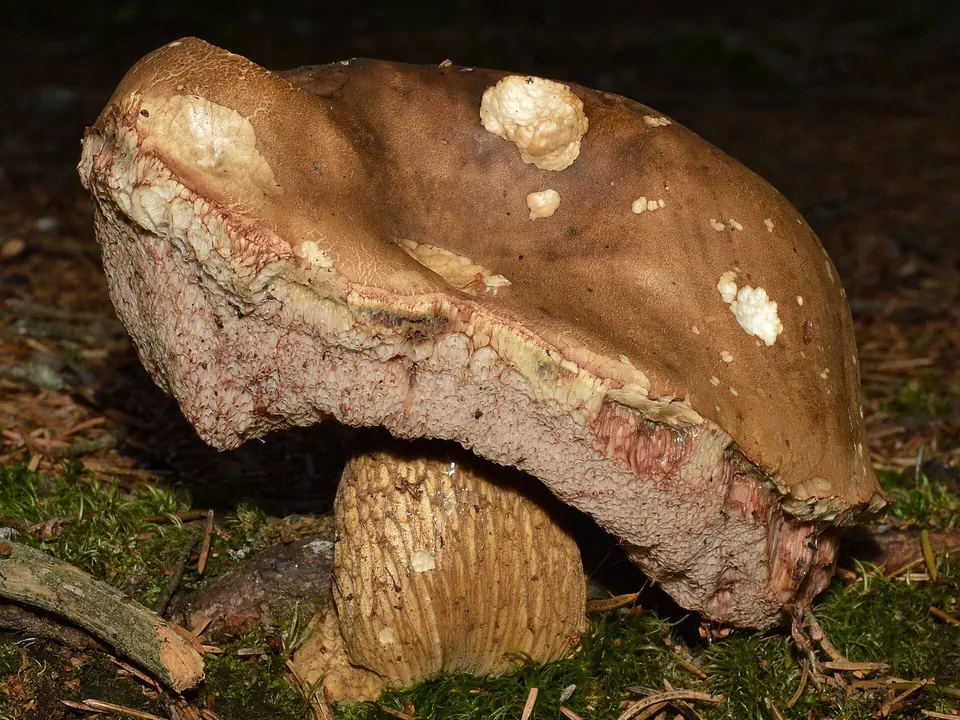
Pinkish pores, coarse dark brown net pattern on the stem, very bitter taste. Not toxic, but a single specimen spoils the whole pan.
?Photo Ryan Hodnett, CC BY-SA 4.0, Wikimedia CommonsSimple rule: white to yellow pores, flesh that does not change colour, mild taste. At the slightest doubt, leave it where it is.
Habitat: where to look
The cep is mycorrhizal: it lives in association with the roots of a living tree and never grows far from it. Look first for the right tree, then for the right spot.
Under which trees
- Broadleaves: oaks, beeches, sweet chestnuts.
- Conifers: spruces, firs, pines (Scots and maritime).
- Dense Douglas fir plantations are reputed to be unfavourable.
- Avoid woods that have just been clear-felled or heavily thinned: forest management studies show that production collapses there for years. Prefer mature stands that have not been disturbed.
Terrain
- From lowland to mountain, depending on the species (the pine cep mostly in the mountains). The higher you go, the earlier the season starts and ends.
- Pickers mainly report slopes that are well exposed to the sun and sheltered from the wind, after a spell of little sunshine. This is not a measured rule: the site does not use it.
Soil
- Rather acidic, well-drained soils (sandy silt under the oak wood studied in Galicia). Avoid waterlogged hollows.
- A healthy litter of leaves or needles is better than a dense thicket.
Microsites: where to look
- Woodland edges, clearings and banks lined with trees, track and firebreak verges: you often find more there than right at the foot of the trunk.
- Dense, poorly lit undergrowth (young spruce plantations) also produces.
- Young ceps hide under leaves or needles: look for small bumps in the ground.
- A spot that has produced generally produces again, year after year.
Season and triggers
The summer cep appears from summer onwards after warm thunderstorms. The big flushes take place from late summer to autumn, roughly one to two weeks after a marked rainy spell (in the Italian study cited below, days with 20 mm of rain or more), when temperatures come back down. A heatwave after the rain can stop everything. At altitude, the season starts and ends earlier.
Sources
The months and periods mentioned are rules of thumb for metropolitan France, not quantified results from a study: the site's calculation is based on the weather (see the method). No precise temperature or pH range is put forward for ceps, for lack of a reliable source.
- Salerni E., Paoli L., Perini C. (2023). Combined impact of forest management and climate change on Boletus edulis productivity. Italian Journal of Mycology 52:76-88. doi:10.6092/issn.2531-7342/16464: positive effect of heavy rain (20 mm or more in a day), mostly around the 12th day afterwards; sudden heat peaks slow production.
- Salerni E. et al. (2002). Effects of temperature and rainfall on fruiting of macrofungi in oak forests of the Mediterranean area. Israel Journal of Plant Sciences 50:189-198. doi:10.1560/GV8J-VPKL-UV98-WVU1: the maximum number of species fruit about 10 days after rain.
- Andrew C. et al. (2018). Explaining European fungal fruiting phenology with climate variability. Ecology 99(6):1306-1315. doi:10.1002/ecy.2237: at altitude, autumn species fruit earlier (up to 30 days' difference); temperature is the main driver.
- Santolamazza-Carbone S. et al. (2025). Microorganisms 13(9):2196. pmc.ncbi.nlm.nih.gov/articles/PMC12472445: ceps in a 30- to 40-year-old pedunculate oak wood, strongly acidic silty-sandy soil, among pastures and sweet chestnuts.
- Parladé J., Martínez-Peña F., Pera J. (2017). Effects of forest management and climatic variables on mycelium dynamics and sporocarp production of Boletus edulis. Forest Ecology and Management 390:73-79. doi:10.1016/j.foreco.2017.01.025: effect of forest management (felling) on the mycelium and on production.
- Wikipédia (French), « Cèpe de Bordeaux » (secondary summary, consulted in November 2026). fr.wikipedia.org/wiki/Boletus_edulis: host trees, acidic soils, woodland edges, banks, tracks and firebreaks, slopes exposed to the sun and sheltered from the wind.