Français
 Deutsch
 Italiano
 Español
 Čeština
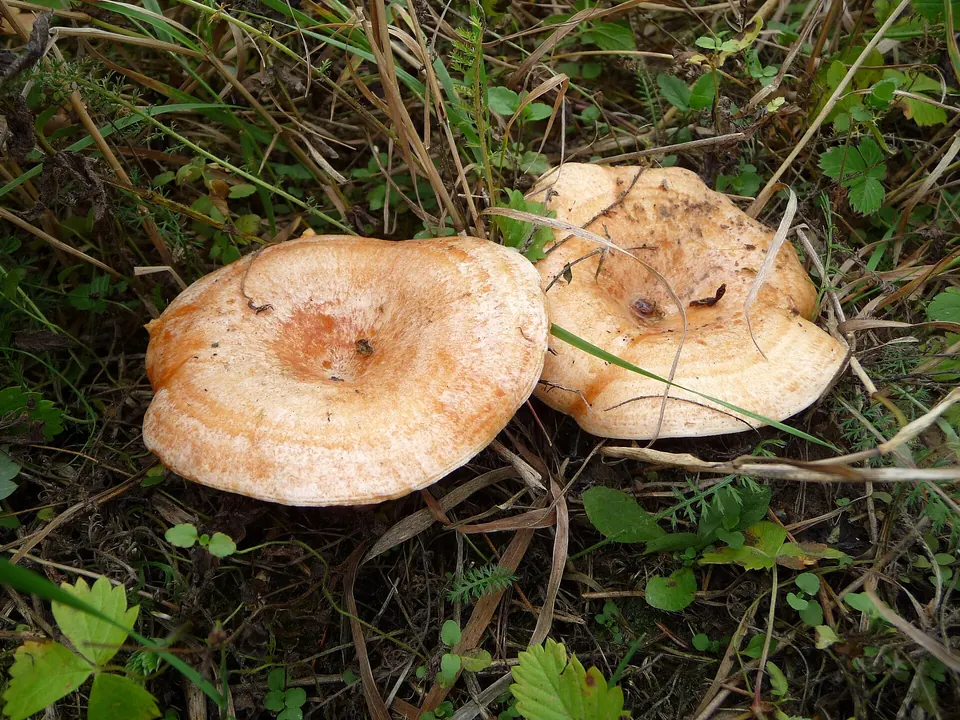
Recognising milk caps
Several coloured-milk milk caps, all edible, are picked under this name:
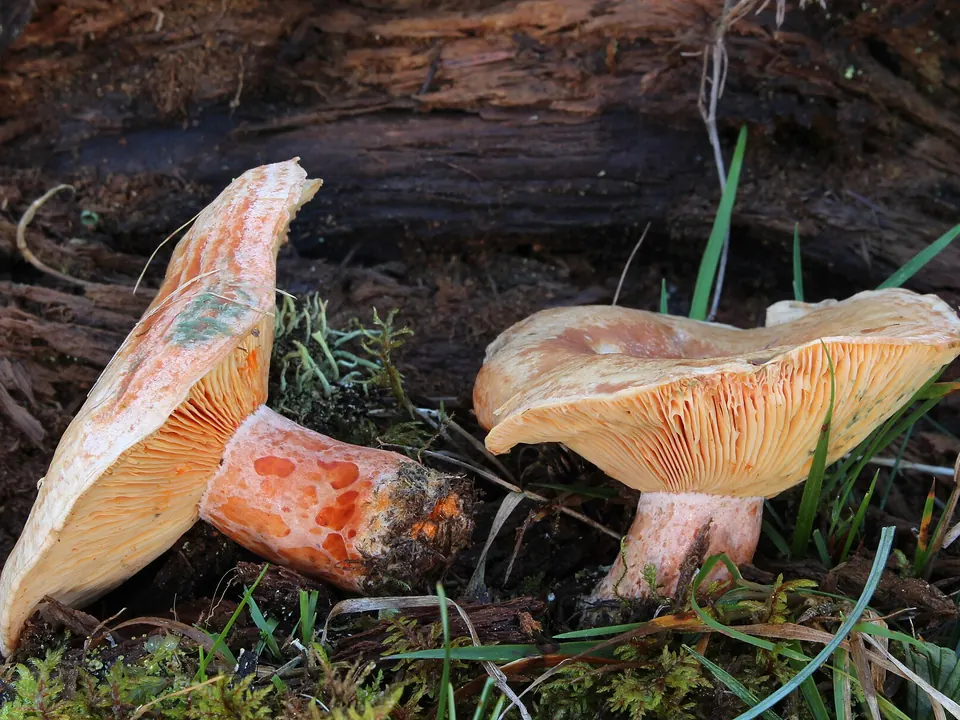
- the saffron milk cap (Lactarius deliciosus), orange cap with concentric rings, carrot-orange milk, under pines;
- the bloody milk cap (L. sanguifluus) and its relatives, with wine-red milk, under pines in the south;
- the spruce milk cap (L. deterrimus) and the salmon milk cap (L. salmonicolor, under fir), less good to eat.
All turn green with age or when touched. The coloured milk, which beads at the break, is the deciding criterion.
Look-alikes
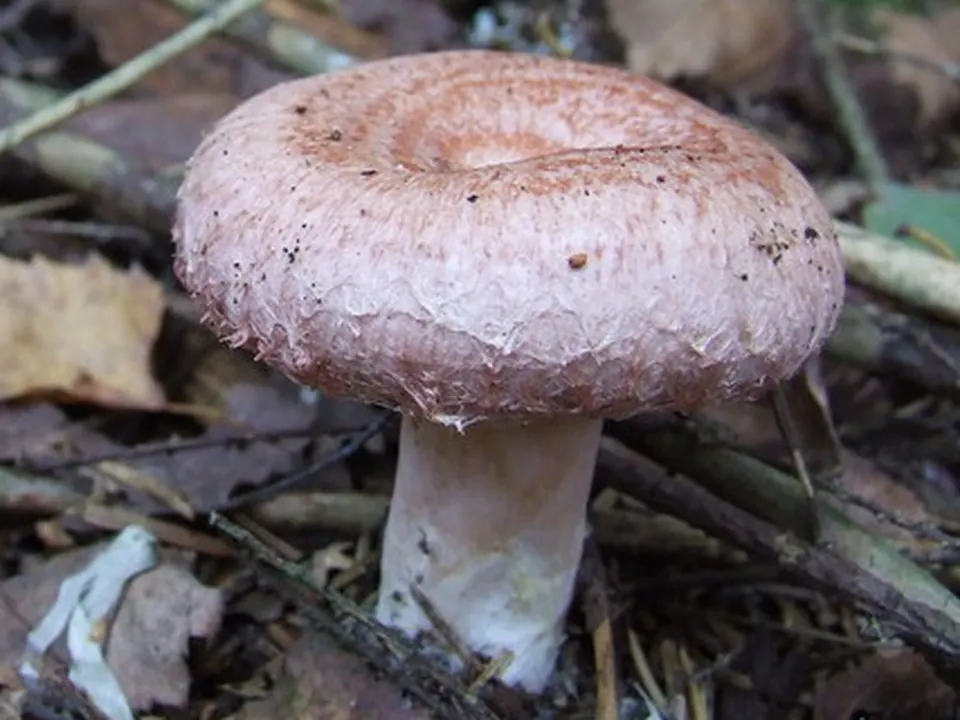
Salmon-pink cap with a woolly edge, white and acrid milk, under birches. Digestive upset.
?Photo Tocekas, CC BY-SA 3.0, Wikimedia CommonsSimple rule: break a gill. The milk must be orange or red, never white. A milk cap with white milk does not belong to this group. Also beware of the yellow-milk milk cap (L. chrysorrheus, under oaks), whose white milk turns yellow: it is toxic.
Habitat: where to look
The saffron milk cap is tied only to pines: no pines, no saffron milk caps.
Under which trees
- Pines: Scots, black, maritime, Aleppo. Pine woods are the classic ground, young and mature alike.
- The spruce milk cap and the salmon milk cap are tied to spruces and firs. Sporalo's map only takes pines into account.
Terrain and aspect
- A mushroom of dry, warm woods: very common around the Mediterranean in autumn, rarer as you go up in latitude. No precise altitude is given by the sources consulted.
- No aspect preference is established: above all look for the pine wood.
Soil
- Rather indifferent to soil acidity and texture: it is found on acidic as well as calcareous soil. A form with reddening milk is reported on calcium-rich soils.
- A well-drained soil, carpeted with needles and short grass, suits it well.
Microsites: where to look
- In the grass and needles of young pine woods, on banks, edges and track verges.
- Often in groups, sometimes in moss under pines.
- Lift the needles: young ones hide underneath. Mature ones are often wormy: pick them young.
Season and triggers
In autumn, later on the Mediterranean coast. It generally comes up one to two weeks after good rain as long as nights stay mild. Specimens are often wormy: they are picked young.
Sources
The months and periods mentioned are rules of thumb for metropolitan France, not quantified results from a study: the site's calculation is based on the weather (see the method).
- Martínez-Peña F. et al. (2012). Yield models for ectomycorrhizal mushrooms in Pinus sylvestris forests. Forest Ecology and Management 282:63-69. doi:10.1016/j.foreco.2012.06.034: rain and temperature are significant variables in production models, including that of the saffron milk cap.
- Salerni E. et al. (2002). Effects of temperature and rainfall on fruiting of macrofungi in oak forests of the Mediterranean area. Israel Journal of Plant Sciences 50:189-198. doi:10.1560/GV8J-VPKL-UV98-WVU1: delay of about ten days between rain and fruiting (all the mushrooms studied, not the milk cap alone).
- Wikipédia (French), « Lactaire délicieux » (secondary summary, consulted in November 2026). fr.wikipedia.org/wiki/Lactarius_deliciosus: exclusive association with pines, rather indifferent to soil pH and texture, dry thermophilous woods, common around the Mediterranean.