Français
 Deutsch
 Italiano
 Español
 Čeština
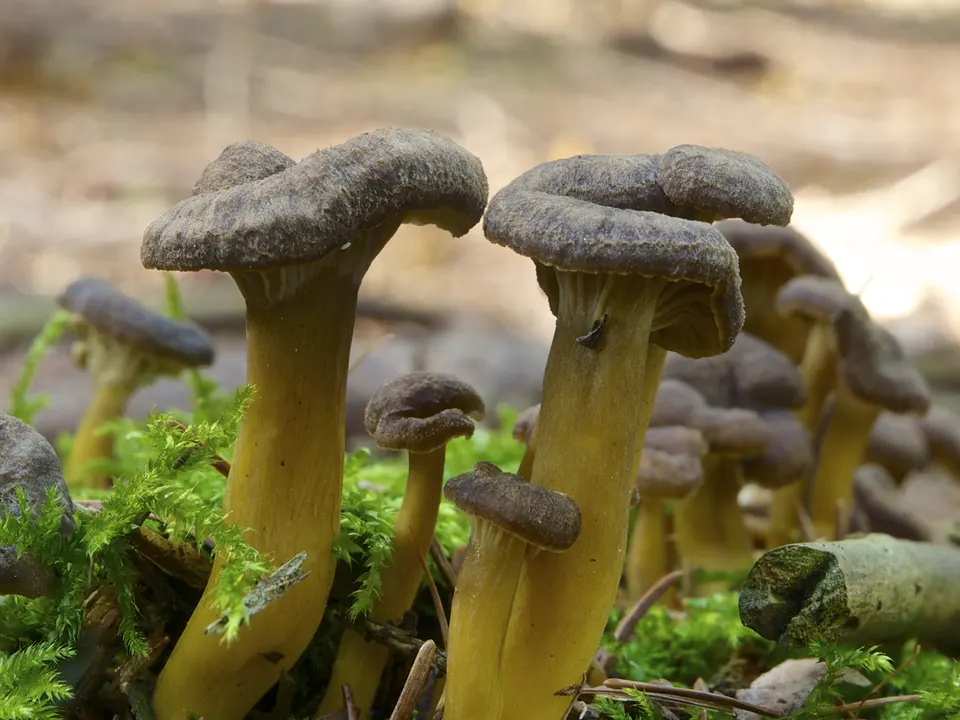
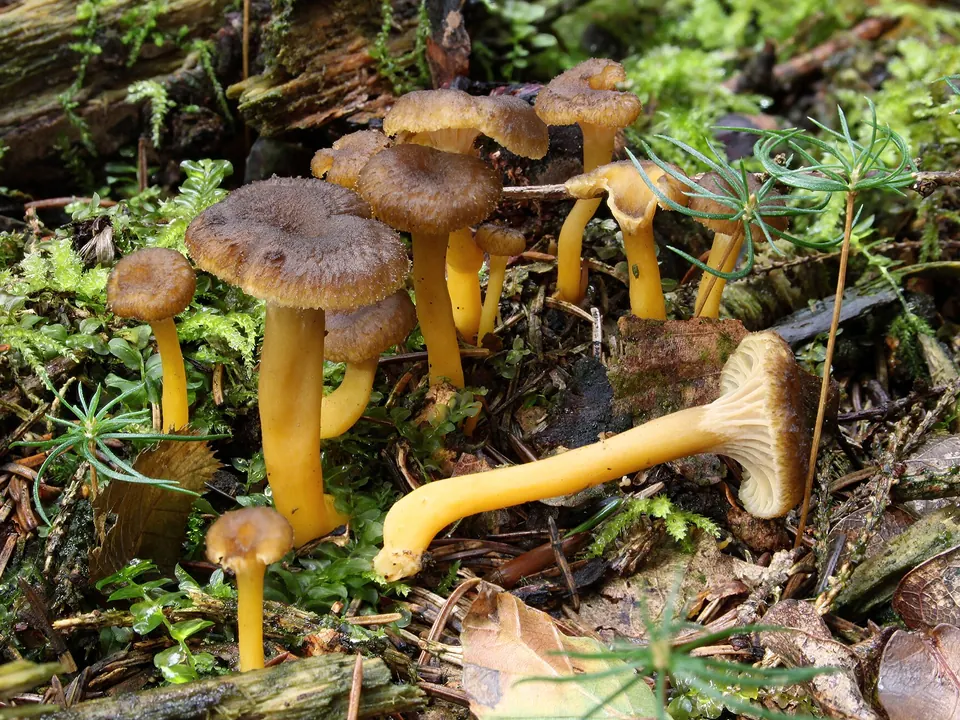
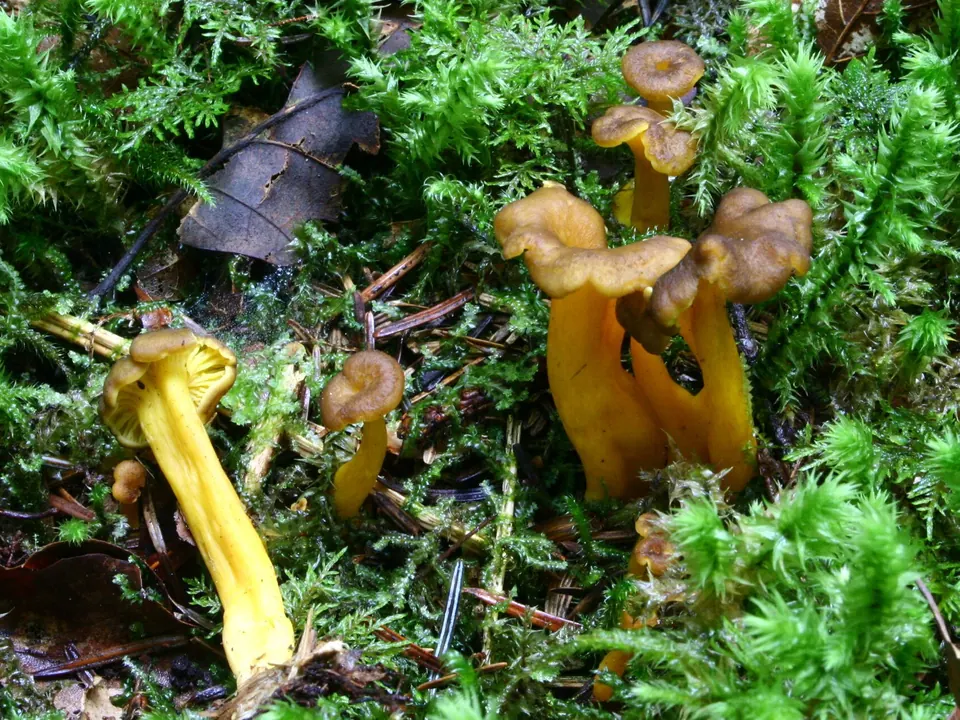
Recognising the funnel chanterelle
The funnel chanterelle (Craterellus tubaeformis), also called the yellowfoot or winter chanterelle, is a small funnel-shaped mushroom:
- olive-brown to grey-brown cap, thin, often hollowed at the centre;
- underside with forked grey ridges, barely prominent, never true gills;
- yellow stem, hollow along its whole length, often flattened.
It grows in large troops: when you find one, there are often dozens.
Look-alikes
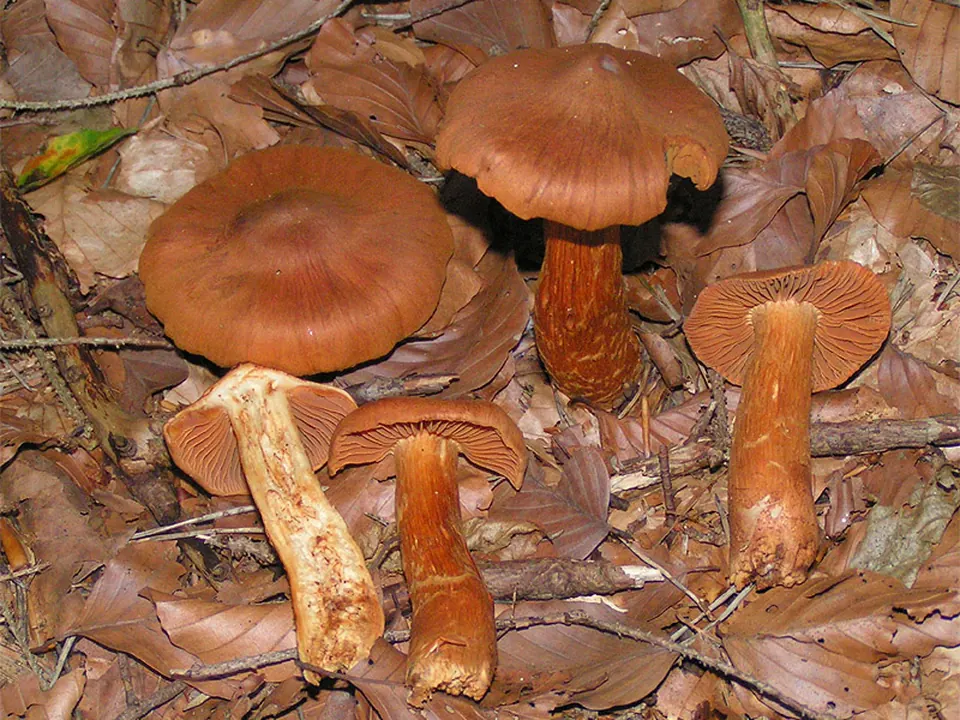
Sometimes grows in the middle of funnel chanterelles, in conifer mosses. True gills and solid stem, russet cap. Severe kidney damage, sometimes permanent, with symptoms appearing only several days, sometimes more than a week, after the meal.
?Photo Eric Steinert, CC BY-SA 3.0, Wikimedia CommonsSimple rule: hollow yellow stem, blunt forked grey ridges. A russet mushroom with true gills and a solid stem is never a funnel chanterelle. The deadly webcap grows in the same conifer mosses: only pick mushrooms you have looked at one by one, and throw away anything with gills.
Habitat: where to look
The funnel chanterelle is the mushroom of mossy, damp conifer forests.
Under which trees
- Mainly spruces and Scots pines; also firs.
- It also grows in beech woods, but rarely under other broadleaves. The species is sometimes found under birches too.
Terrain
- Common in mid-mountain areas (Vosges, Jura, Massif Central, Alps), and present everywhere in France where there are damp woods. No precise altitude or aspect is established by the sources consulted: look for moisture and moss rather than an orientation.
Soil
- Acidic, poor soils: on limestone, it only appears where the soil is acidic.
- Moderately to very damp soil, often near heavily rotted wood.
Microsites: where to look
- In moss carpets (including sphagnum): its grey-brown colour blends in with the ground. Look first for the little yellow stems.
- In very dense troops, sometimes in lines or circles: when you find one, look around, there are often dozens.
- Mossy trunks and rotten stumps, damp track verges.
Caution: the deadly webcap grows in the same habitat, sometimes in the middle of the clumps. Pick one by one, never with a rake, and look at each stem.
Season and triggers
From autumn to early winter, with a peak in late autumn. It likes lasting soil moisture more than a big thunderstorm and holds on until the first real frosts. It keeps very well when dried.
Sources
The months and periods mentioned are rules of thumb for metropolitan France, not quantified results from a study: the site's calculation is based on the weather (see the method). No study was retained to put figures on this species' pH or temperature: this page gives none.
- Svanberg I., Løvaas E., Ståhlberg S. (2025). How funnel chanterelle (Craterellus tubaeformis) became an urban forager favorite in Scandinavia. Journal of Ethnobiology and Ethnomedicine 21:37. doi:10.1186/s13002-025-00789-x: uses and popularity of the species (no fruiting data); also describes the ecology: link with spruce and Scots pine, beech woods, acidic, poor soil, medium to high moisture, mosses, very large troops, deadly webcap in the same habitat, sometimes in the middle of the clumps (pick one by one).
- Wikipédia (French), « Chanterelle en tube » (secondary summary, consulted in November 2026). fr.wikipedia.org/wiki/Craterellus_tubaeformis: moss and litter, very damp habitats, rotten wood, groups in lines or circles.