Français
 Deutsch
 Italiano
 Español
 Čeština
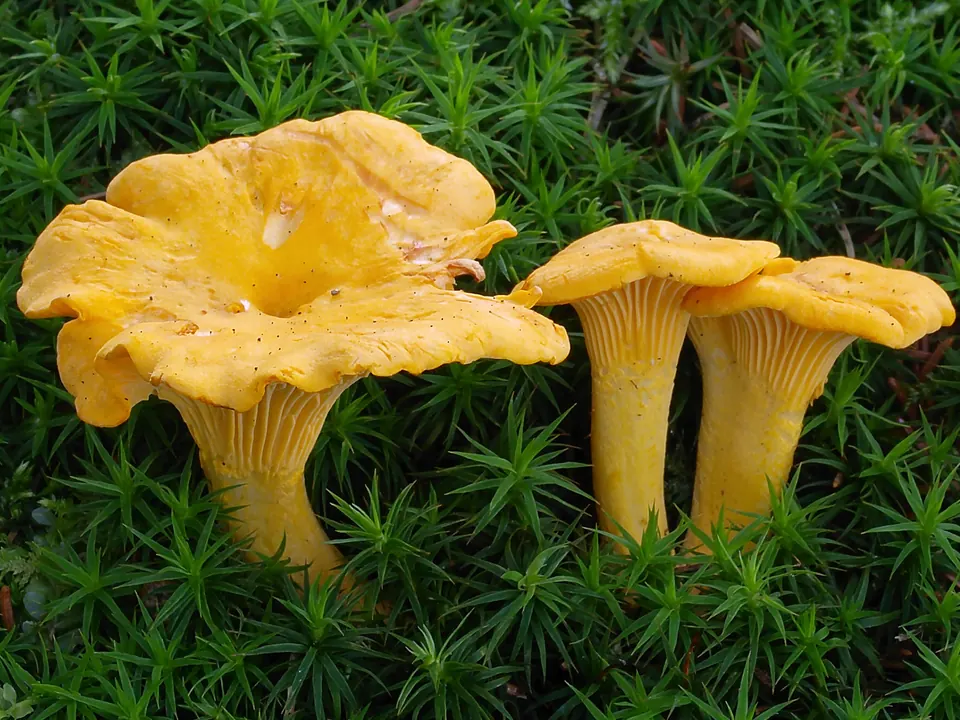
Recognising chanterelles
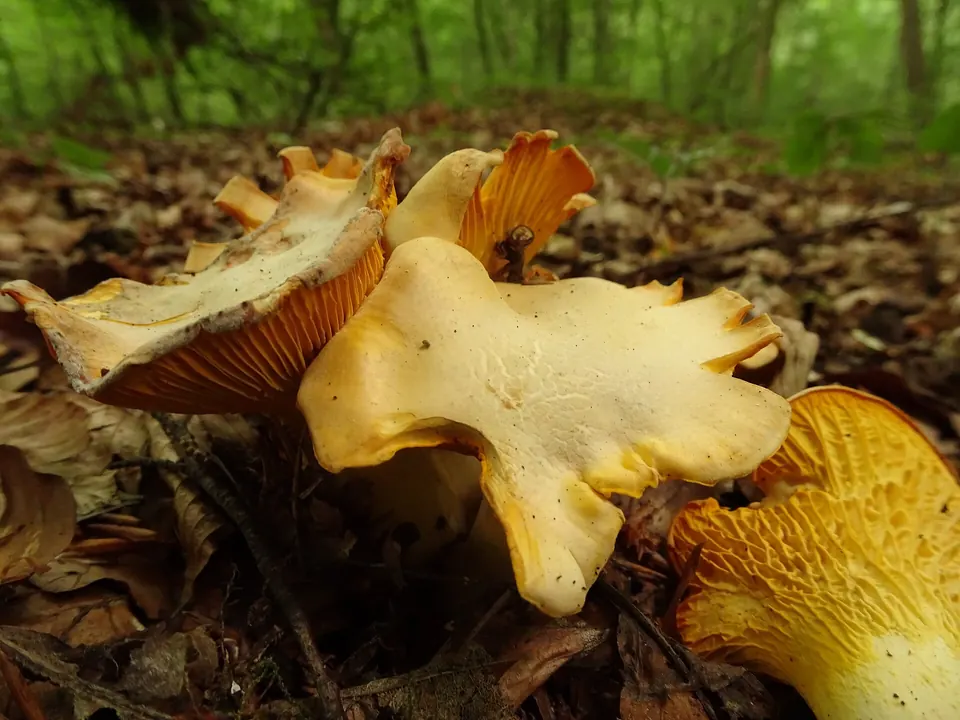
The common chanterelle (Cantharellus cibarius), the pale chanterelle (C. pallens, a duller yellow, under broadleaves) and the amethyst chanterelle (C. amethysteus, cap covered in fine violet-tinged scales). All share:
- thick, branching, forked ridges running down the stem (no true thin gills);
- firm flesh, white to yellowish;
- a fruity apricot scent.
Look-alikes
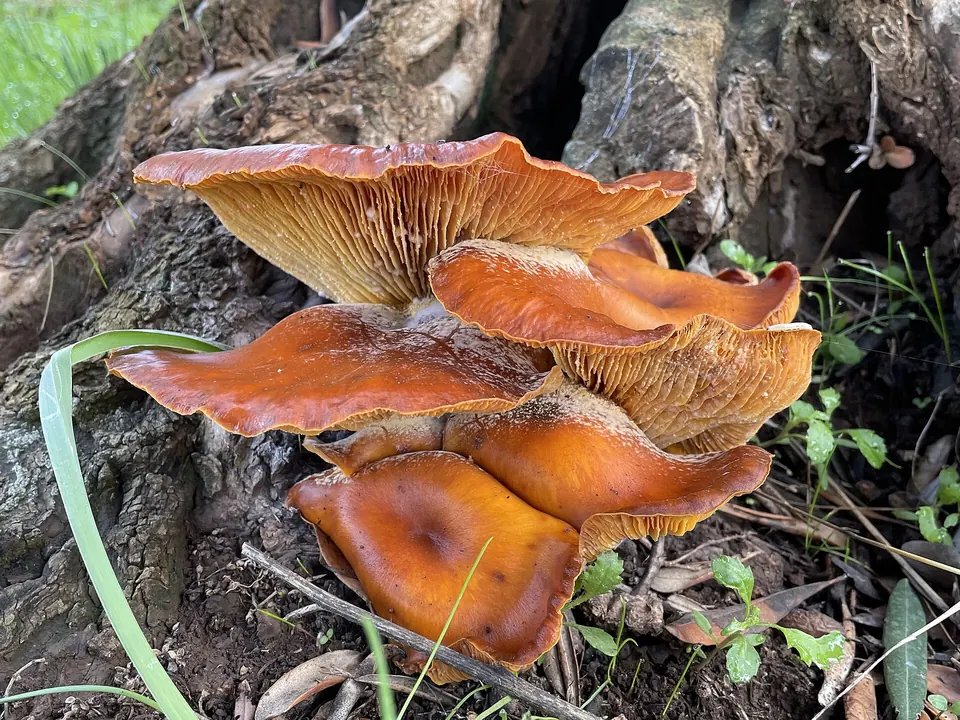
In tight tufts on stumps or roots (olive, oak, sweet chestnut), true orange gills. Mainly in the south. Severe digestive upset.
?Photo Adriano De Astis, CC BY 4.0, Wikimedia Commons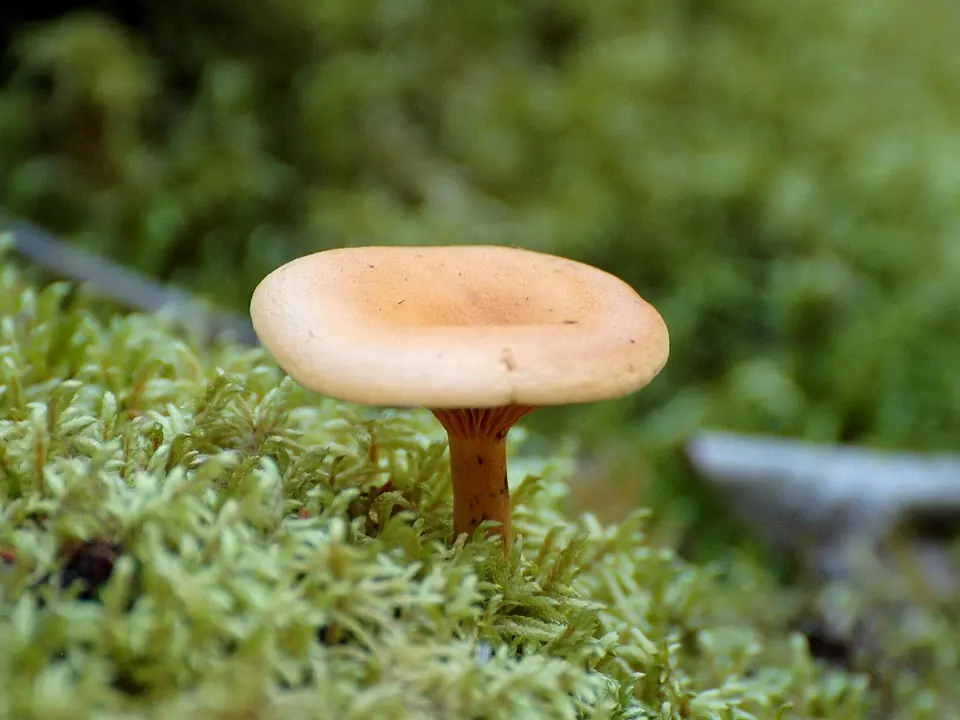
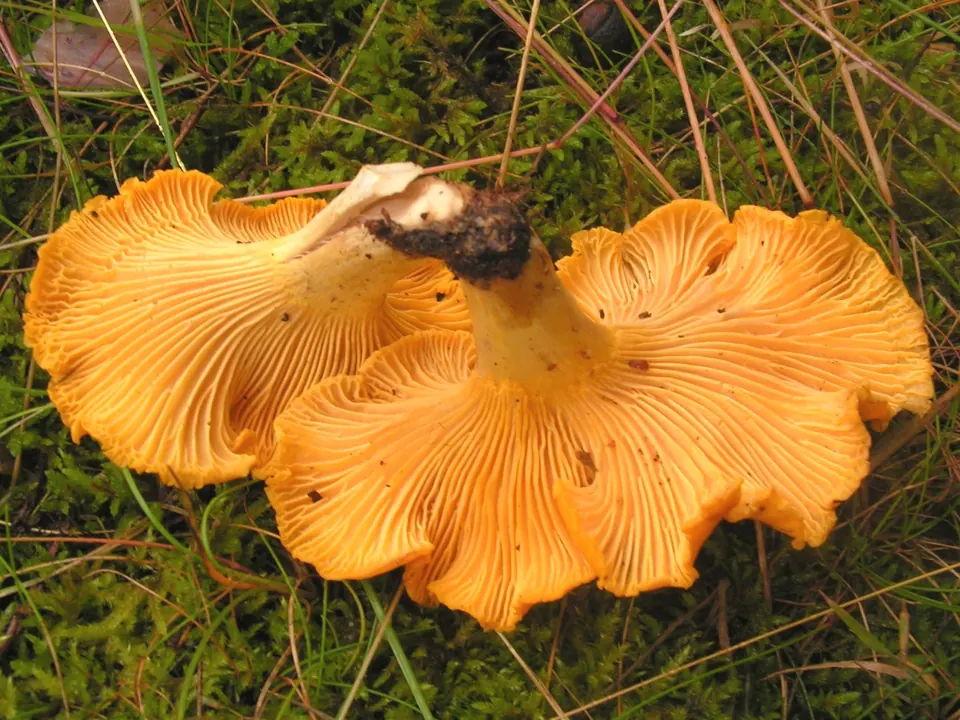
True thin, crowded, bright orange gills; soft flesh. Often on wood or conifer debris. Of no culinary interest, sometimes poorly digested.
?Photo Dr. Suzanne Carriere (CarriereS), CC BY-SA 3.0, Wikimedia CommonsSimple rule: thick, forked ridges, never thin gills, never in a tuft on wood.
Habitat: where to look
The chanterelle is mycorrhizal: it grows within reach of living trees, often hidden in moss.
Under which trees
- A very wide range: oaks, beeches, sweet chestnuts, birches, hazels, but also spruces and pines.
- It also grows under mountain birches. No precise altitude limit is established in the sources: it follows the forest.
- It fruits under young trees as well as mature ones; a clear-fell can wipe out a patch (Pilz et al.).
Soil
- Acidic, nitrogen-poor, well-drained soils (pH 4.0 to 5.5 according to the work cited below). It avoids enriched soils, such as former manured land.
- Avoid waterlogged low spots.
Aspect: no north/south preference is established by the sources consulted. Look instead for the right soil and the right moisture.
Microsites: where to look
- In moss, in groups or sheets, more rarely in tufts.
- On banks and along old forest tracks: pickers in Oregon report many chanterelles there, with no established explanation.
- Woods that keep old rotting dead wood retain moisture in dry years (a hypothesis from pickers, reported by researchers).
- It is faithful to its spots: a productive spot generally stays productive year after year. The mushrooms last several weeks: return to a known patch.
Season and triggers
From summer to autumn, sometimes into November on low ground. Studies on the chanterelle link its abundance to autumn rain and summer warmth. It grows slowly and can stay in place for several weeks.
Sources
The months and periods mentioned are rules of thumb for metropolitan France, not quantified results from a study: the site's calculation is based on the weather (see the method).
- Pilz D., Norvell L., Danell E., Molina R. (2003). Ecology and management of commercially harvested chanterelle mushrooms. USDA Forest Service, PNW-GTR-576. fs.usda.gov/pnw/pubs/gtr576.pdf: the chanterelle grows best in well-drained, nitrogen-poor soil of pH 4.0 to 5.5; fidelity to the same spots from one year to the next; positive correlation with summer temperature and, weaker, with autumn rain (Oregon data); specimens staying in place for up to 90 days; very wide range of host trees; good production also under young trees; chanterelles frequent along old forest tracks (explanation not established); rotting dead wood that retains moisture (hypothesis).
- Wikipédia (French), « Girolle » (secondary summary, consulted in November 2026). fr.wikipedia.org/wiki/Cantharellus_cibarius: broadleaf and conifer hosts, mountain birch forests, acidic and drained soils, fidelity to spots.