Français
 Deutsch
 Italiano
 Español
 Čeština
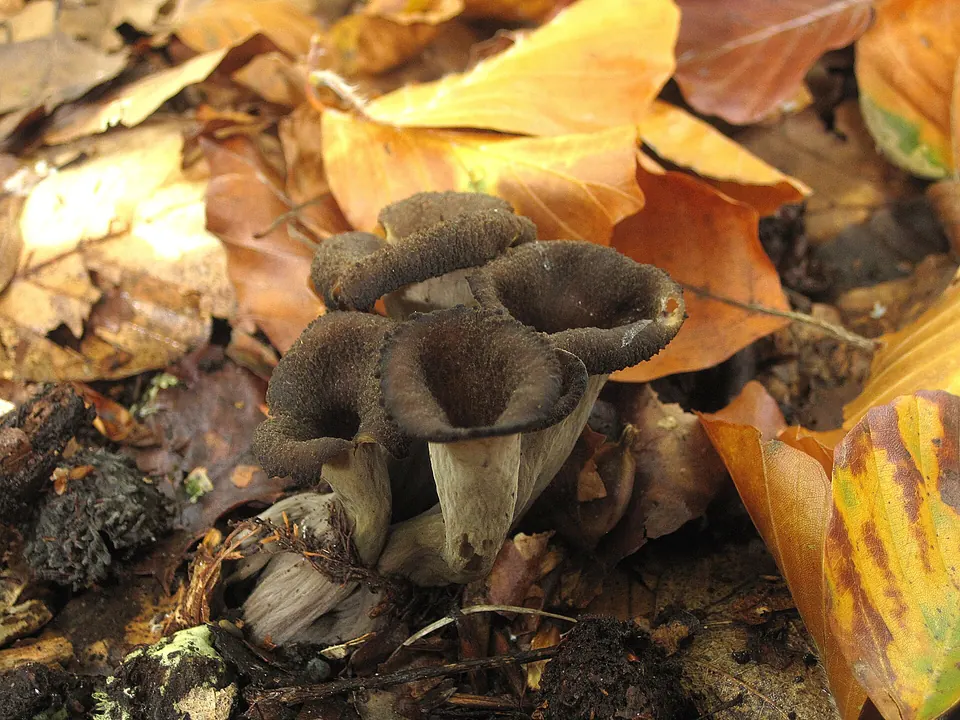
Recognising black trumpets
Under the name “trumpets”, two dark funnel-shaped Craterellus with hollow stems are picked (the funnel chanterelle has its own page):
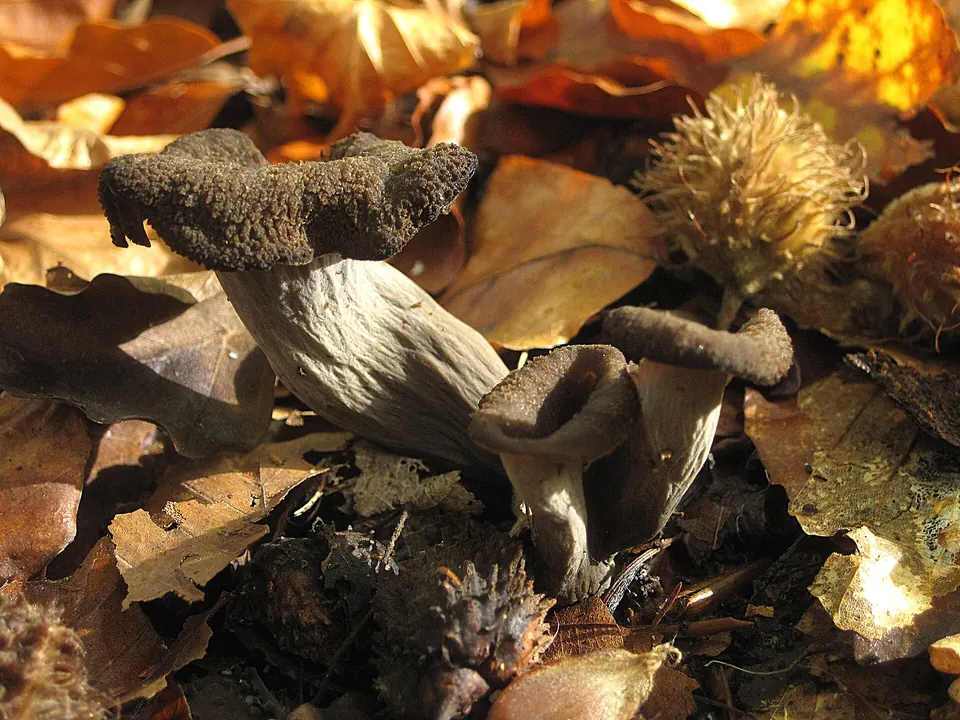
- the black trumpet or horn of plenty (Craterellus cornucopioides), entirely grey-black, smooth outer surface, under broadleaves;
- the grey chanterelle (C. cinereus), darker, with clearly marked ridges and a fruity smell.
Possible confusions
Simple rule: funnel hollow down to the base, grey to black, outer surface smooth or with forked ridges, never gills. This guide lists no dangerous look-alike for black trumpets, but the funnel chanterelle, paler and with a yellow stem, has a deadly look-alike (see its page): do not pick everything funnel-shaped without looking.
Habitat: where to look
The black trumpet is a mushroom of dark, cool, damp undergrowth. It is hard to see: its grey-black colour blends in with dead leaves.
Under which trees
- Mainly broadleaf forests: beeches, oaks, sweet chestnuts, hazels; sometimes under conifers.
- The grey chanterelle lives in similar habitats.
Soil and moisture
- It prefers heavy, very wet soils, for example clay, rather than dry, sandy soils. It can be very abundant after heavy rain.
- No precise altitude or aspect is established by the sources consulted: look for cool shade and moisture.
Microsites: where to look
- In the dead-leaf litter, in groups almost like carpets, in dark places.
- Look at ground level, or look for small dark funnels: you will see it better crouching than walking.
- Small valley bottoms, stream banks and shaded sunken lanes hold moisture longer.
Caution: the funnel chanterelle, which likes other habitats (conifers and moss), has a deadly look-alike: see its page.
Season and triggers
From late summer to early winter (as early as July-August in the north-east, in a wet year), often until the first frosts. These species like lasting soil moisture more than a big thunderstorm. They keep very well when dried.
Sources
The months and periods mentioned are rules of thumb for metropolitan France, not quantified results from a study: the site's calculation is based on the weather (see the method). No study was retained to put figures on the season of these species: this page gives none.
- Wikipédia (French), « Trompette de la mort » (secondary summary, consulted in November 2026). fr.wikipedia.org/wiki/Craterellus_cornucopioides: broadleaf forests (beeches, oaks, sweet chestnuts, hazels), heavy and very wet soils, carpet-like groups in the litter, camouflage among leaves.