Français
 Deutsch
 Italiano
 Español
 Čeština
Recognising the morel
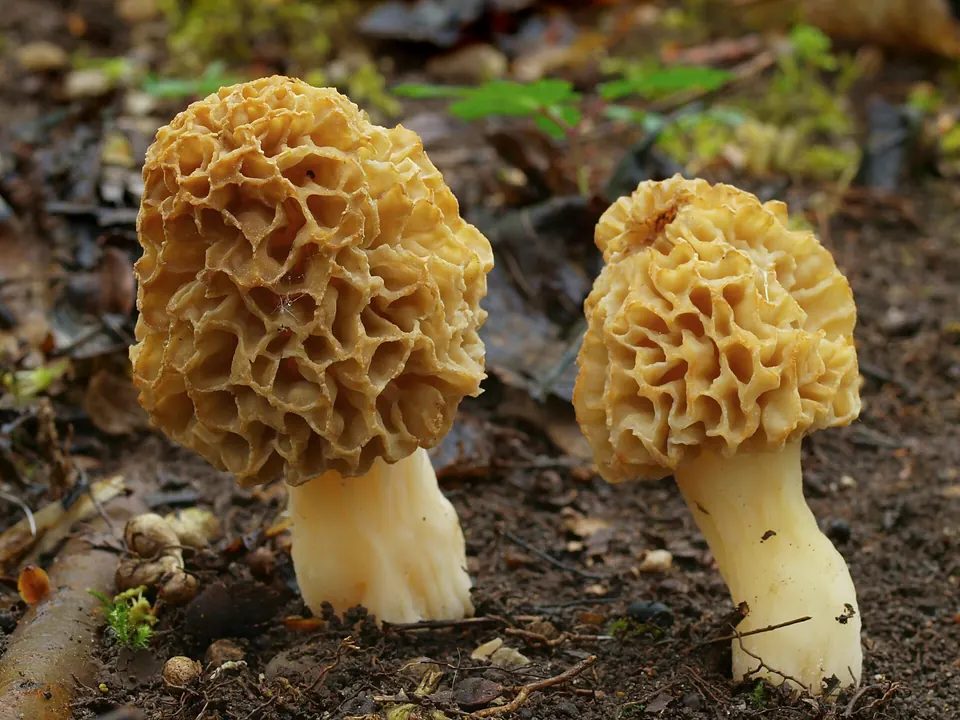
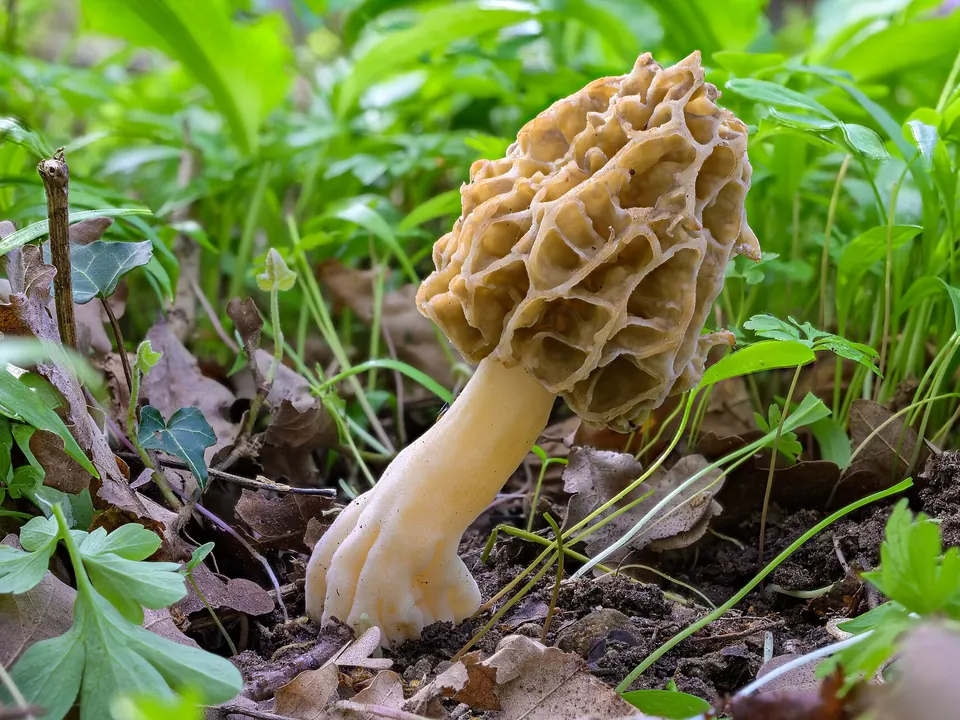
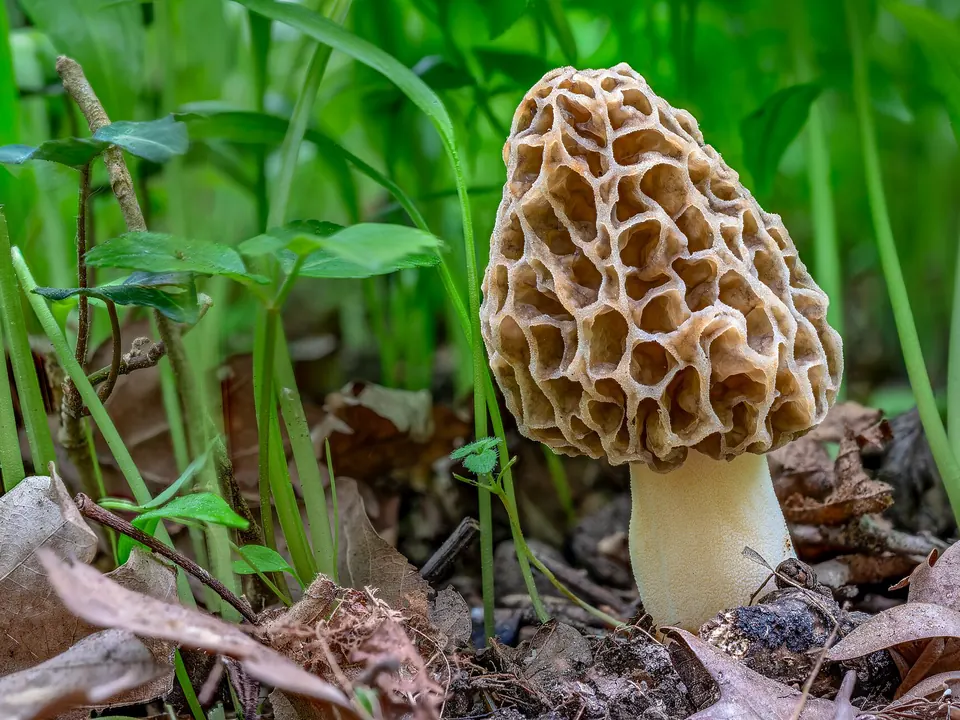
True morels (Morchella): the blond morel (M. esculenta group), the conical morel and the black morels (M. elata group), as well as the half-free morel (M. semilibera, cap attached to the stem only at mid-height). All have a sponge-like honeycombed cap and are entirely hollow from the top of the cap to the base of the stem, in a single chamber.
Look-alikes
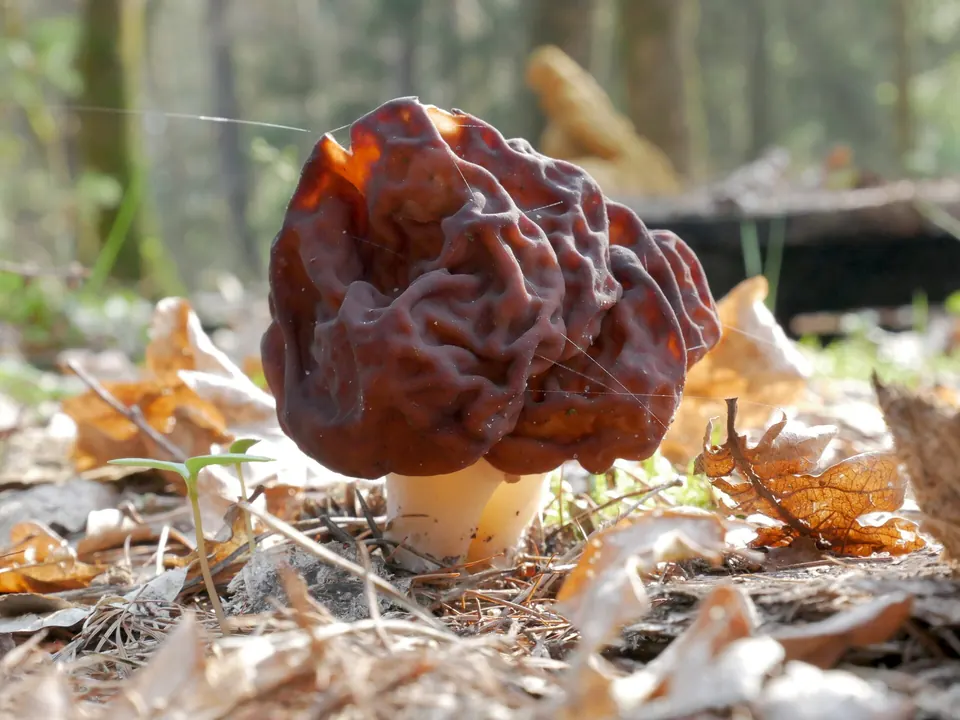
Cap folded like a brain, red-brown, chambered flesh (not a single hollow), under conifers in spring like morels. Toxic even when cooked, deadly in some cases: essential to know.
?Photo ChristianSW, CC0, Wikimedia Commons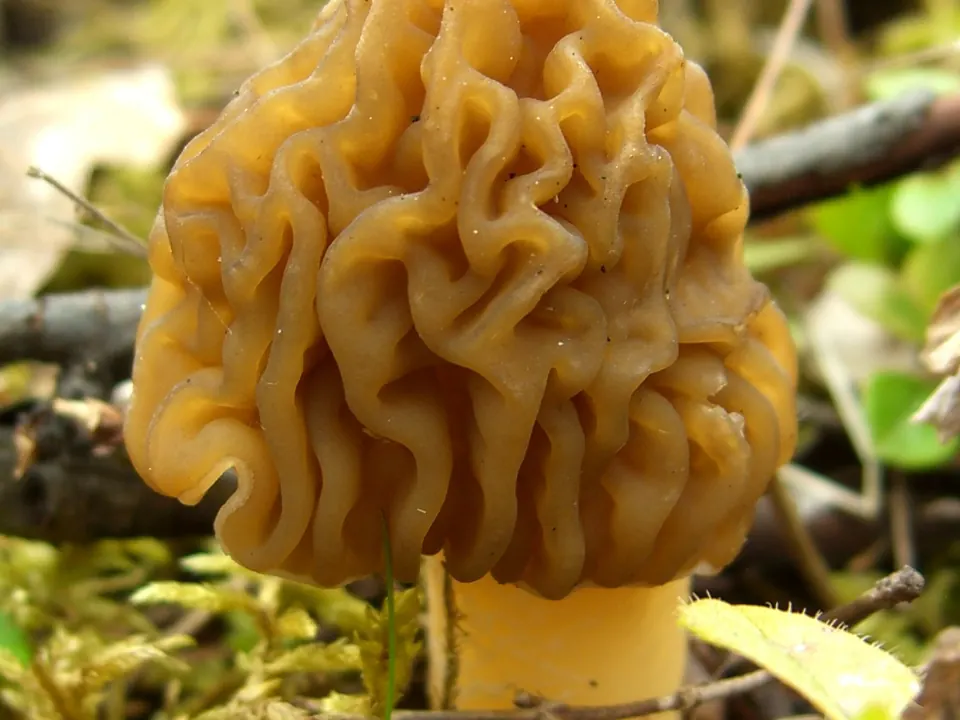
Cap sitting like a thimble, attached only at the top of the stem, cottony interior. Reject.
?Photo Jason Hollinger, CC BY-SA 3.0, Wikimedia CommonsSimple rule: regular pits, cap attached to the stem (at mid-height only for the half-free morel), interior entirely hollow when cut lengthwise. A cut lengthwise is essential. And always cook thoroughly: raw or undercooked morel is toxic.
Habitat: where to look
Morels are varied: depending on the species, they live along rivers, in old orchards, on burnt ground or in the mountains under conifers. They do not depend on a single host tree, so Sporalo's habitat score is less precise for them.
The main habitats
- Ash, elm, poplar: river and stream banks, edges of ash woods on calcareous soil.
- Old orchards (apple trees are mentioned), hedgerows, rubble and disturbed ground. The conical morel group “importuna” is also found in compost, meadows and gardens.
- Burnt areas: the American literature describes morels in large numbers the first spring after a fire, then rarer afterwards. Access to burnt forests is often regulated: find out before going.
- Mountains: the conical morel and the purple morel grow mostly under mountain conifers.
- Mediterranean: garrigue under holm oaks and rock-roses, and coastal dunes for other species.
Terrain and soil
- Cool and rather calcareous ground: alluvium, valley bottoms, watercourse banks. Altitude delays the season (see below).
- No aspect (north or south) is established by the sources consulted.
Microsites: where to look
- Around ash and elm trees, old apple trees, at the edge.
- In short grass or last year's leaves: the honeycombed cap is well camouflaged.
- When you find one, look all around: they often grow in small groups.
Caution: the place alone is not enough to recognise a morel. Always cut it lengthwise (see “Look-alikes”).
Season and triggers
Spring: March to May on low ground, later in the mountains. Flushes follow the warming of the soil after spring rains: for the morel studied by Buscot (1989), fruiting starts when the soil exceeds about 6 °C. In autumn, the morel map is empty: that is normal.
Sources
The months and periods mentioned are rules of thumb for metropolitan France, not quantified results from a study: the site's calculation is based on the weather (see the method). The 6 °C threshold comes from a study on one specific species: it does not apply to all morels.
- Pilz D. et al. (2007). Ecology and management of morels harvested from the forests of western North America. USDA Forest Service, PNW-GTR-710. research.fs.usda.gov/treesearch/26906: soil threshold of 43 °F (about 6 °C) for Morchella rotunda (Buscot 1989, cited by the authors); variations in soil temperature and moisture trigger fruiting; morels from burnt areas from the first spring after a fire.
- Mihail J.D., Bruhn J.N., Bonello P. (2007). Spatial and temporal patterns of morel fruiting. Mycological Research 111:339-346. doi:10.1016/j.mycres.2007.01.007.
- Andrew C. et al. (2018). Explaining European fungal fruiting phenology with climate variability. Ecology 99(6):1306-1315. doi:10.1002/ecy.2237: in spring, fruiting is delayed at altitude.
- Wikipédia (French), « Morchella » (secondary summary, consulted in November 2026). fr.wikipedia.org/wiki/Morchella: morels under ash trees at the edge on calcareous soil, cool ground, orchards, rubble, burnt places, compost and gardens, mountain species under conifers, garrigue and dunes.