Français
 Deutsch
 Italiano
 Español
 Čeština
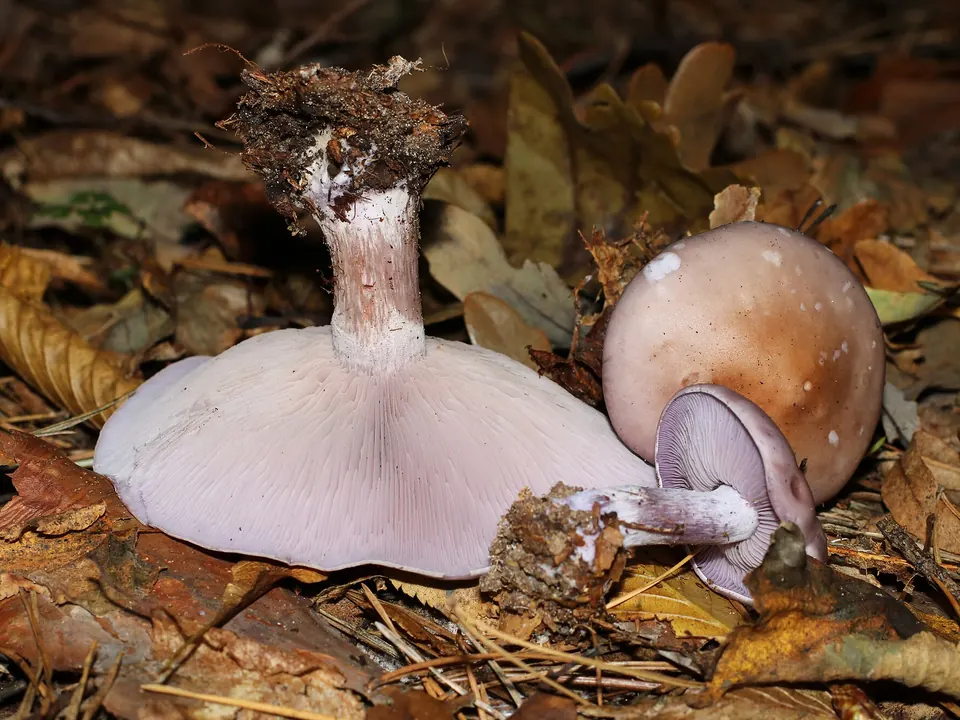
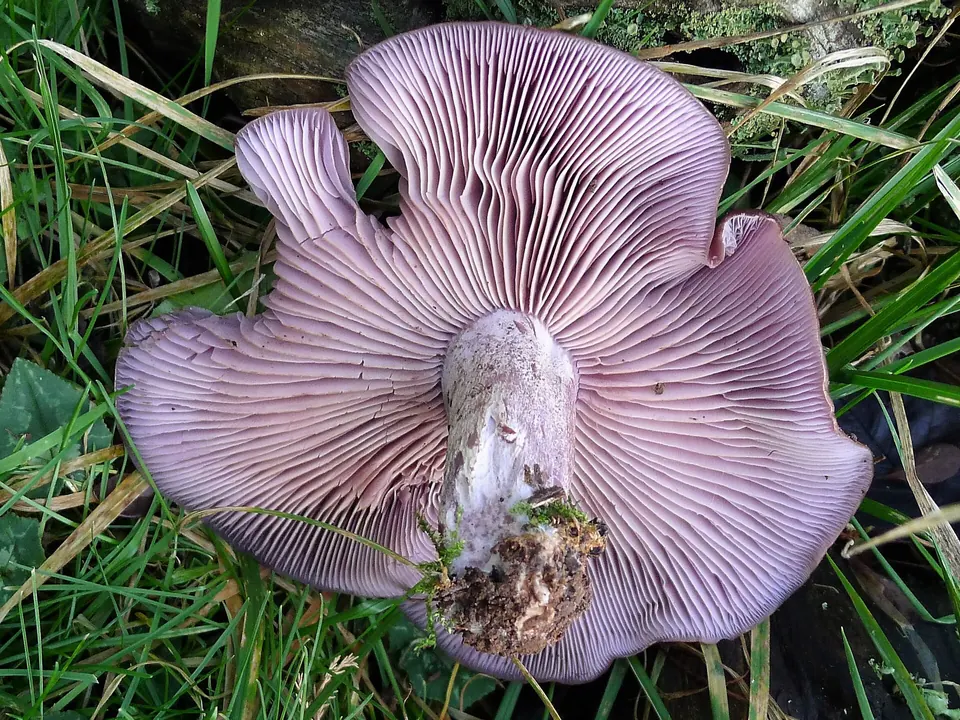
Recognising the wood blewit
The wood blewit (Lepista nuda) is one of the last mushrooms of the year:
- lilac to violet-brown cap, smooth, fleshy;
- violet gills, crowded, which separate easily from the flesh;
- violet, fibrous stem, with no ring or veil;
- pleasant fruity smell, pale pink spore print (not rust-coloured).
Look-alikes
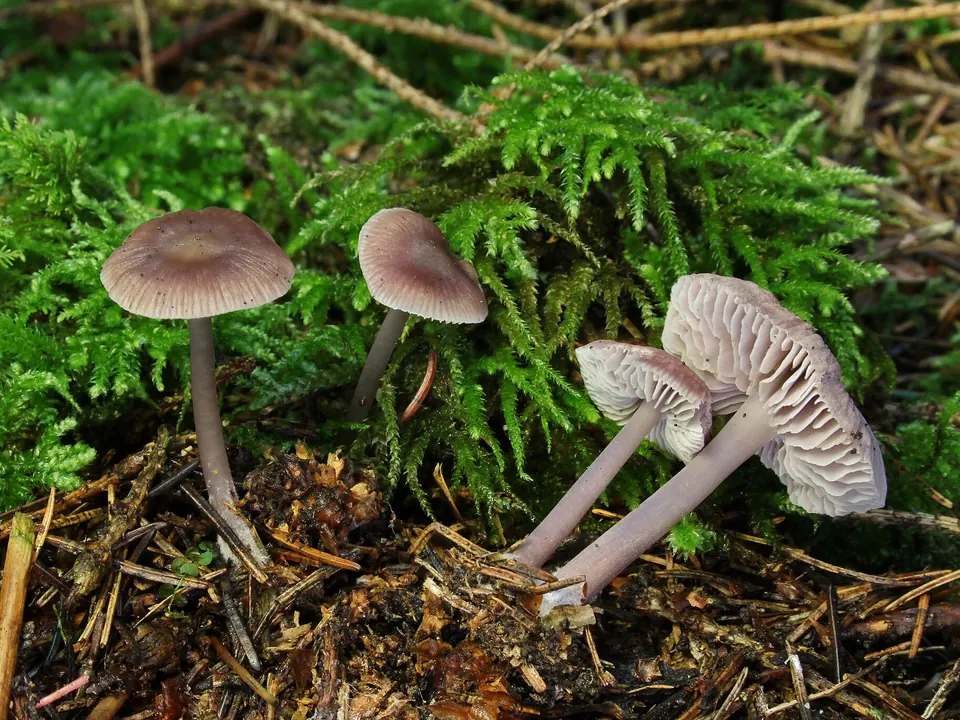
Smaller and fragile, brittle hollow stem, smell of radish. Contains muscarine.
?Photo Holger Krisp, CC BY 3.0, Wikimedia Commons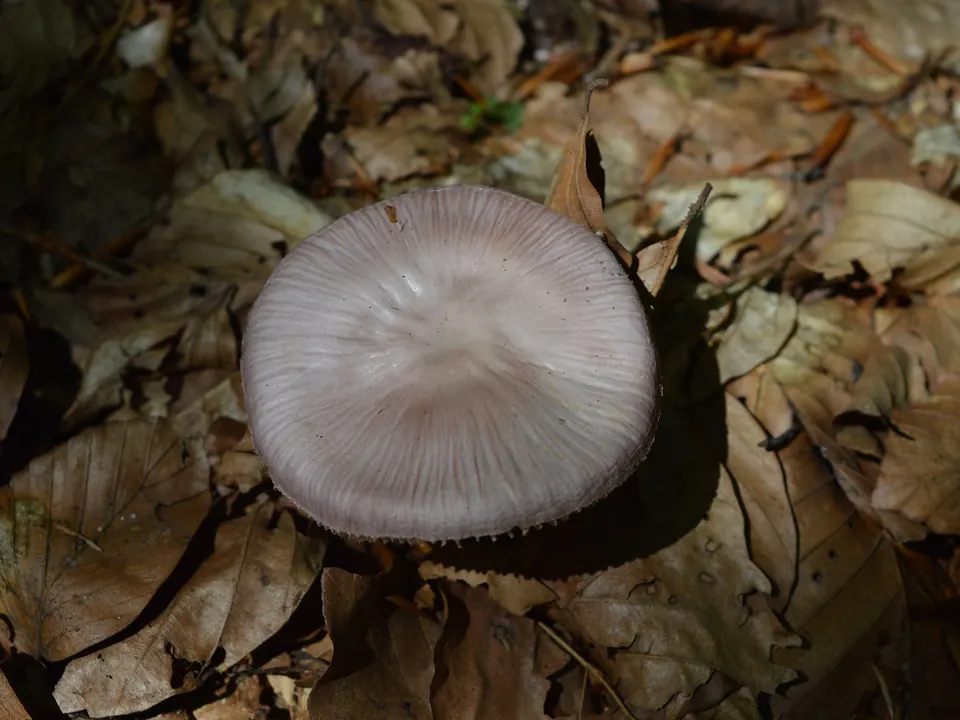
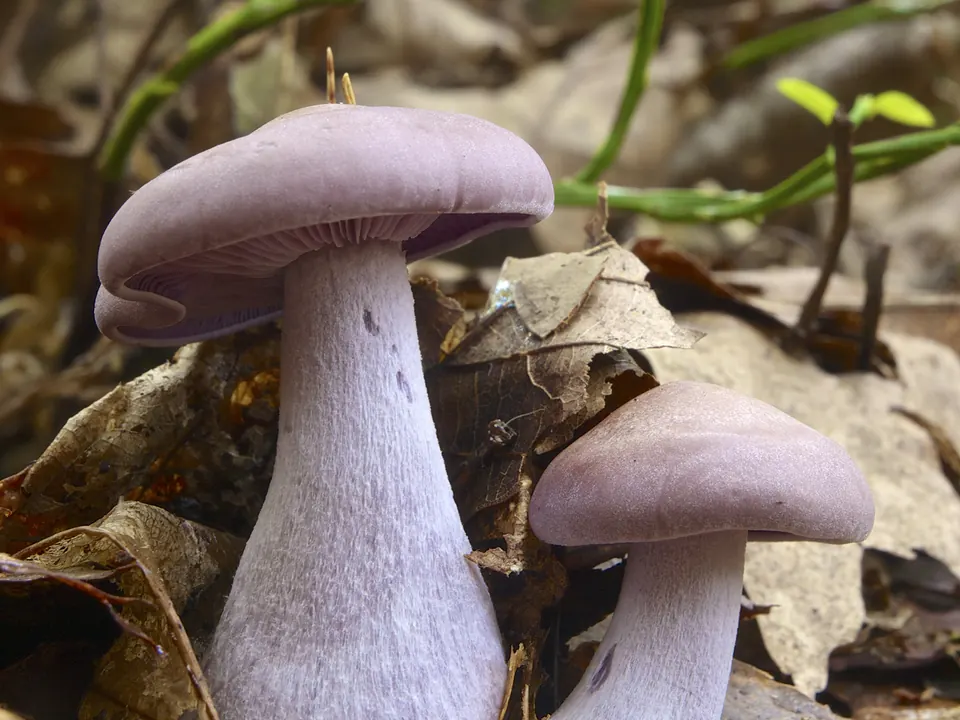
Small conical, silky lilac cap, brownish gills, spermatic smell. Muscarine.
?Photo Bojana Matić, CC BY-SA 4.0, Wikimedia Commons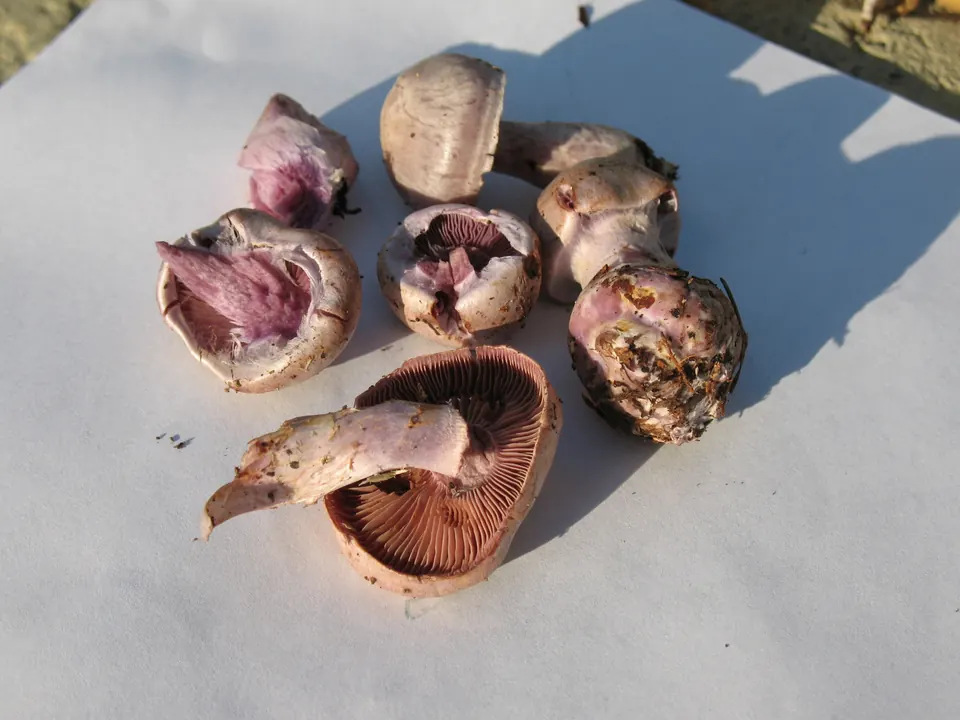
Also violet, but with a cobweb-like veil, rust-coloured gills and a strong smell of acetylene. Violet webcaps are to be excluded.
?Photo natureluvr01, CC BY 2.0, Wikimedia CommonsSimple rule: never a cobweb-like veil under the cap, never rust-coloured gills, fruity smell. Small violet or lilac mushrooms with a thin stem are not wood blewits. Always have it checked if in doubt.
Habitat: where to look
The wood blewit has no host tree: it decomposes dead plant matter (leaves, twigs, needles). So it is found where litter builds up.
Which habitat
- Broadleaf and conifer woods alike, edges, hedgerows, parks.
- One variety grows rather outside woods, in meadows and pastures enriched by livestock.
- Heaps of leaves or compost also suit it.
- Ploughed land and built-up areas do not suit it.
Terrain and soil
- No precise altitude, aspect or acidity is established by the sources consulted (Sporalo does not take pH into account for it). Above all look for a thick layer of fresh, decomposing litter.
Microsites: where to look
- In the thickness of dead leaves, at the edge, at the foot of hedges, along tracks.
- In often numerous troops, frequently in circles (“fairy rings”) or lines: if you find one, look around.
- It comes up after the first cold weather, when many other mushrooms have finished.
Caution: other violet or lilac mushrooms, some of them toxic, can grow in the same kind of litter: the place alone is not enough to tell them apart, check every specimen (see “Look-alikes”).
Season and triggers
From autumn to early winter. It likes damp cold and tolerates the first frosts, unlike most species. It is always eaten well cooked.
Sources
The months and periods mentioned are rules of thumb for metropolitan France, not quantified results from a study: the site's calculation is based on the weather (see the method). No published study on the wood blewit was retained to support figures: this page therefore gives none. Habitat: Wikipédia (French), « Pied bleu » (secondary summary, consulted in November 2026), fr.wikipedia.org/wiki/Lepista_nuda: broadleaf and conifer woods, decomposing plant matter, meadow and pasture variety, compost, numerous troops, fairy rings, after the first cold weather. On temperature as a driver of autumn fruiting, see Andrew C. et al. (2018). Explaining European fungal fruiting phenology with climate variability. Ecology 99(6):1306-1315. doi:10.1002/ecy.2237